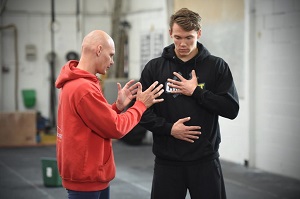
Deep BreathingThere are TWO extremes of deep breathing. One is sympathetic nervous system high chest based and invites anxiety and vaso constriction (constriction = closing and restricting blood and oxygen flow). The other is based in the lower abdomen and invites relaxation and vaso dilation (dilation = opening allowing increased oxygenated blood flow). Most breathing driven nervous system responses are a proportion of each with one having more influence than the other such with the extremes of deep relaxation to panic. One can be trained to develop either tendency but clearly the parasympathetic rest digest and heal is the one most need or would choose for health and well being. Most so called deep abdominal breathing results in deep effortful breathing. It is not always really breathing deeply and can actually be harmful or exacerbate existing, undetected unbalanced, dysfunctional breathing. Deep breathing when done incorrectly will cause accessory breathing muscles to engage/restrict that should not be anything but supportive. Like the shaft of an elevator should guide the elevator but not cause it to go up and down. They are better made known or clarified with question E1 in the free breathing test. One major marker for optimal breathing is the best possible sympathetic/parasympathetic depth and balance combined in any moment in time or action. Respiration: Bio-Chemistry and Mechanics The “mechanics” of respiration, sometimes called exogenous breathing, constitute “breathing,” the USE of the lungs and their related nerves muscles and bones (ribs etc) for moving oxygen, carbon dioxide, and other gases to and/or from the blood." The way we use “breathing mechanics” ala deep breathing has reference to breathing patterns (holding, gasping, sighing), breathing rate, breathing depth (volume), locus of breathing (chest and diaphragm), breathing coordination (relationship of upper and lower breathing wave), breathing resistance (nose and mouth), and collateral muscle activity for breathing regulation (muscles other than the diaphragm). “Breathing chemistry” has two main co-factors; Carbon dioxide and oxygen. Most know those functions so I will pass over them here. 1. Respiratory chemistry related to carbon dioxide impact can be significantly monitored by measuring changes in exhaled carbon dioxide, as well as to track significant (but not all) aspects of breathing mechanics. This carbon dioxide balance (endtidal CO2 -5%) is influenced by biochemical terrain such as acid alkaline balance, or cell hydration. It is often is a major marker for CO2 influences as related to vascular dilation or constriction feeding specific parts of the human body including the brain and vital organs. High blood levels of CO2 causes the body to open the gates to let in more oxygen to the red blood cells/hemoglobin. CO2 levels can be a major marker for appropriate respiratory chemistry in of itself but I believe it almost always has cofactors (see breathing mechanics below) that may be much more relevant depending on the breathing pattern dominance of lower abdominal or high chest dominant breathing. 2. Law of Mass Action as referred to by William Campbell Douglas is whereby the extra oxygen can be "packed" into the body tissues for later recovery and usage. The CO2 levels referred to in hypocapnea or too little CO2 in the blood may not always be as relevant as our science text books have led us to believe and may more depend on breathing mechanics and nervous system balance ala parasympathetic-low abdominal or sympathetic-high chest breathing patterns. So we have at least TWO aspects of deep breathing that can greatly influence our body. RELAXATION. This "relaxation" may lower stress response and save lives, be a shift in conscious awareness and cognition, or be no more than a kind of transient trance state. As a result, a large percentage of therapists and trainers who teach breathing can deregulate respiratory chemistry by inducing “overbreathing/unbalanced breathing" with their "relaxation" instructions to trainees, not realizing that they are inducing system-wide psycho-spiritual and psycho-physiological crisis through the creation or exacerbation of hypocapnia, i.e. carbon dioxide deficit. This often results in exacerbating respiratory faults, or distorting optimal breathing balance and coordination as well as confusing the client/patient. Unfortunately, based on this kind of "relaxation" dominant thinking, myths and misunderstandings about “good” breathing often constitute the “working knowledge” of health professionals and lay audiences alike. FACTS TO REMEMBER from Dr.
Peter Litchfield
in italics
Good breathing means relaxation.
Diaphragmatic
breathing is synonymous with good breathing.
Good
respiration is all about the mechanics of breathing.
Diaphragmatic,
deep, slow breathing means better distribution of oxygen.
Underbreathing/shallow breathing, with the result of oxygen deficit or loss of
personal power, is common.
Good breathing translates into optimizing respiratory psychophysiology, and contrary to popular thinking, learning to breathe well does not simply mean deep, slow, diaphragmatic breathing in the context of learning how to relax. Adaptive breathing means regulating blood chemistry, through proper ventilation of carbon dioxide, in accordance with metabolic and other physiologic requirements associated with all life activities and circumstances: relaxation or stress, rest or challenge, fatigue or excitement, attention or open-focus, playing or working. Deregulated, unbalanced breathing chemistry, i.e., hypocapnia (CO2 deficiency) as a result of overbreathing, means serious physiological crisis involving system-wide compromises that involve physical and mental consequences of all kinds, to be examined later in this overview. Evaluating, establishing, maintaining, and promoting good respiratory chemistry is extremely important in any professional practice involving breathing training. Good breathing chemistry establishes a system-wide context conducive to help optimize health and maximize performance. The more you can measure the more you can manage. Breathing training is invariably included as an important component of relaxation training, but does not in of itself constitute optimal relaxation or optimal respiration. Optimal breathing implies ALL factors are in place in any moment in time. At least 8 factors must be addressed to ensure optimal deep breathing. Priority is dependant upon the condition and situation.
Each one influences the others. Training for various tasks alters the ratios and needs for each of the 8 basic influences as it inputs a conditioning factor that changes mechanical and cellular needs in the moment. Whether you call it optimal breathing, overbreathing, hyperventilation, unbalanced breathing, maladaptive breathing or sub-optimal breathing, many receive great breathing AND respiration improvement with our self help combination of Manual, DS, 176 Fundamentals Video. They may need to work with us over the phone or come to our office and benefit from modern oxygen and carbon dioxide measuring technology plus in-person breathing development expertise.
|
|
|||||||||||||||||||||||||
|
Home |
Overview |
Free Breathing Test |
Free Newsletter |
Store |
Office Visits |
Practitioner Trainings |
Voice Clinic |
Sleep Clinic |
|
Seminars |
Articles |
Health Q & A |
Health Tips |
Testimonials |
Miscellaneous |
Affiliate Program |
Contact Us |
About Us |
Michael Grant White, Breathing.com,
1800 Camden Rd. Suite #107-36, Charlotte, NC, 28203 USA
Toll-Free Phone: 866 MY INHALE (866 694 6425)
International Phone: 1 704 332 7663
© Copyright 1997-2008 Breathing.com. All rights reserved.
|
Terms & Conditions |
Privacy Policy |
Translate |
Currency Converting |
Report Deadlink
The breathing improvement
techniques, practices and products outlined in this publication are extremely
gentle, and should, if carried out as described, be beneficial
to your overall physical and psychological health. If you have any serious medical or
psychological problem, however, such as heart disease,
high blood pressure,
cancer, mental illness, or recent abdominal or chest surgery, you should consult your
health professional before undertaking these practices.